
The Perfect 4 Day Rome Itinerary

Planning the perfect trip to Rome can feel overwhelming – there’s a lot to see, and even more to eat. We spent our honeymoon in Italy, and I’ve put together this 4-day Rome itinerary based on our week there, to help you make the most of your time in the Eternal City.
The most striking thing about Rome is its very high/low feel. Beautifully dressed Italian women navigate cobblestone roads in high heels with casual grace, there are ancient sites that have been immaculately preserved alongside gritty neighbourhoods, the traffic is chaotic, and the heat is intense in the summer. It’s glamorous but relaxed, people are cheeky and fun, and it has a very European charm.
This guide gives you a beautifully paced 4-day Rome itinerary, without trying to cram everything in. Expect ancient ruins, gelato-fuelled walks, long lunches, and allllll the pasta.
Meals in Italy
We didn’t get breakfast included with our hotel stay, because if you eat as much pasta and gelato as I do in Italy, breakfast is entirely unnecessary. But if you’re worried about hanger, get a cornetto, an Italian pastry a lot like a croissant. They are usually filled with a sweet, flavoured cream, but if you prefer a savoury one, ask for a cornetto vuoto (empty). A Roman breakfast speciality is a maritozzo, a sweet cream-filled bun.
After breakfast, and on the way to your first stop of the morning, stop by an Italian coffee bar for a caffè (an espresso). Pay first at the cashier, and then give the receipt to the barista, and stand at the bar. Cappuccinos and lattes are only to be had in the mornings, and never after a meal, as they are considered to disrupt digestion.
After lunch in Italy, it is compulsory that you have a gelato (you may find yourself having another after dinner, which is perfectly acceptable). Before dinner, and after a short nap, you should have a passeggiata (a leisurely early evening stroll) on your way to an aperitivo (a pre-dinner drink).
Rome is glamorous, but definitely not as anxiety-inducing in its cool factor as, for example, Paris is. It is full of tourists, so there is no need to dress up for most restaurants, unless you want to. Italians do dress well, so if you do, you will avoid standing out as a tourist.
Day 0 – Arrival and Your First Roman Pasta
I’ve added day 0 in case you arrive in Rome late, after working a full day, as we did – your first meal in Rome, which you will remember forever, must be a good one.
Arrive in Rome and check into your hotel. Rome is small, but you want to stay relatively centrally, ideally within the Centro Storico (the Historic Centre). We stayed at Chapter Roma, which meant we were able to walk to most of the sites in Rome. Walking is the best way to get around European cities, so I always prefer my hotel to be as central as possible (and you want easy access to good food options).
Check availability and prices for Chapter Roma here
For your first Roman dinner, you can’t go wrong with Osteria da Fortunata, which has five locations in Rome and makes all its pasta fresh. It stays open late, so it’s perfect for Friday night after-work arrivals. It is essential to have a Roman pasta on your first night in Rome.
Choose between the four Roman classics: cacio e pepe (cheese and pepper, sort of like an adult version of mac and cheese); gricia (cacio e pepe with the addition of guanciale, cured pork cheek), amatriciana (like gricia but with added tomatoes), and carbonara (a richer version of gricia, with the addition of egg yolk).
Best of luck to you in not developing a full-blown food fixation which you will never be able to cure in your home country, dooming you to an eternity of futile Sisyphean kitchen labour and a continual stream of tears of frustration… or maybe that’s just me.
Day 1 – Centro Storico (The Historic Centre) – Fountains, Piazzas and More Pasta


The Trevi Fountain and the Piazza Navona
Morning – Make a Wish at the Trevi Fountain
If you want your first Roman espresso with a side of literary prestige, try Antico Caffe Greco, once loved by Keats, Byron and Shelley (warning, it is slightly expensive), and then take a ten-minute walk to the Trevi Fountain.
The Trevi is the largest fountain in Rome, designed by Nicola Salvi in the 18th century, and its clear blue water and baroque architecture are absolutely stunning (if you happen to return at night, it is also beautiful when it’s lit up in the dark). Until recently, it was best to get to the Trevi Fountain as early as possible, before the hordes descended.
Since 2025, Rome has been limiting access to the Trevi Fountain and introduced a queuing system to prevent huge crowds. As of 1 February 2026, a €2 entrance fee will be charged to view the Trevi Fountain up close between 9 am and 9 pm. If you view it from the piazza above, there is no fee, and if you go before 9 am or after 9 pm, there is also no fee.
I’m never a fan of waking up incredibly early on holiday, and I also think with the crowd control, you’ll now have a better chance of getting a photo of the fountain without 50 strangers in it. That said, you will probably have to spend a bit of time here. If you can’t stand the idea of a queue, go very early, and have your coffee and breakfast afterwards, but if you’re arriving later, plan to spend between 30 minutes and an hour here.
I do think it’s worth getting close, especially if you want to make a wish at the Trevi Fountain, as tradition dictates: hold a coin in your right hand, and toss it over your left shoulder, with your back to the fountain. If you throw in one coin, you will return to Rome; if you throw in two, you will return and fall in love; and if you throw three, you will return, fall in love, and marry.
A word to the wise: you will notice a heavy security presence at the Trevi Fountain, and Italian police are not to be trifled with. Do not indulge your Dolce Vita fantasies here.
The Pantheon
If you do the Trevi Fountain early this morning, have breakfast and coffee afterwards, and then head towards the Pantheon for the second half of your morning. Afterwards, go to Armando al Pantheon or La Ciambella for lunch (make a reservation to be safe).
Afternoon – Carbonara, Gelato and the Spanish Steps


Lunch at Don Pasquale and gelato at Giolitti
Tourists often add their own extra wishes when tossing their coins into the Trevi Fountain, and I, of course, wished for a carbonara for lunch. Wishes come true in Italy.
The area around the Trevi Fountain is a bit of a tourist trap, and the only place worth eating at here is Don Pasquale. We went at midday, without a reservation (a bit of a risk, I wouldn’t recommend this, but that’s the power of a Trevi Fountain wish, I guess), and my first Roman carbonara did not disappoint. We also had the best melanzane of our collective lives.
After lunch, take a stroll around the historic centre, visit Piazza Collona and Piazza Navona, and have a gelato. One of the best things to do in Italy, particularly on your first visit, is to find your favourite flavour – try Giolitti. Afterwards, take a stroll up to the Spanish Steps. Unfortunately, you’re no longer allowed to sit on the steps (dashing your Lizzie McGuire fantasies), but they are beautiful to walk down, and there’s a Bernini fountain at the bottom.
Evening – Dinner at a Roman Wine Bar


Dinner at Beppe e Sui Formaggi in Rome
For a casual dinner, try Beppe e Sui Formaggi (“Beppe and His Cheeses” – can you handle it!), a cosy, casual enoteca (wine bar) which we stumbled upon (note, closed on Sundays). We had wine, cheese and charcuterie, the staff were very jovial, and we made a life-altering discovery about balsamic vinegar.
You may have thought, throughout your life thus far, that you had had balsamic vinegar. It has probably not featured in any large or dramatic fashion, and most people have fairly agnostic views towards it. But Beppe introduced us to actual Italian balsamic vinegar! This is much thicker, less sweet than the usual stuff, and utterly delightful for dipping your bread into. Trust me, the course of your life will not be the same once you try it.
If you prefer something slightly more formal, go to Luciano Cucina Italiana, where we had two very delicious lunches at their outdoor tables, set on the square. On both occasions, we showed up without a reservation, and they were friendly and willing to accommodate us (but don’t do this, love your future self enough to just make a reservation).
Day 2 – Ancient Rome: Colosseum, Palatino, Roman Forum and the Capitoline Museums
Morning – Beat the Heat at the Colosseum and the Palatino

If the weather is warm, book your Colosseum tickets for as early as possible in the morning and visit the Capitoline Museums in the afternoon. We did it the other way round, and had quite the baking experience in the afternoon sun – don’t make our mistake!
You can buy a skip-the-queue ticket when you make your booking, which also includes entrance to the Palatino and the Roman Forum. It’s worth doing them all on the same day since they’re all pretty close together, although that does mean this is a very full day – don’t skimp on your gelato rations today.
Check availability and prices for the Colosseum, Palatino and Roman Forum here
The Colosseum was Rome’s first permanent amphitheatre, which was built in AD80, and where gladiator games took place for almost 400 years. You can spend a good few hours here, book a guided tour, or make use of the audio tours that they offer.
Afterwards, take a short walk to the Palatino (Palatine Hill), and admire the ruins of ancient Rome. According to Roman myth, Rome was founded on the Palatino by Romulus, after he killed his brother Remus.
Afternoon – The Roman Forum and the Capitoline Museums
At this point, the next natural stop is the Roman Forum, but if you are teetering on the edge of hunger, I recommend lunch first – the Roman Forum is big and not very well sign-posted, and tempers may begin to fray.
Lunch is a bit of a conundrum in this area. I have a general life maxim that it is difficult to have a bad meal in Italy, but super touristy areas like this are the exception. For unmatched views of Rome, try 47 Circus Roof Garden. Like all rooftop restaurants, the prices reflect the view somewhat, but the food is genuinely good. Alternatively, for something very different, we stumbled upon Nonno Melo, which was rustic, local and delicious.
After lunch, go to the Roman Forum if you haven’t yet been. This is an open-air museum, displaying the ruins of ancient Roman government buildings. Next up, visit the Capitoline Museums, the world’s oldest public museums. The 5th-century bronze sculpture of the Capitoline Wolf with Romulus and Remus is a must-see, as is Bernini’s Medusa bust.
Check availability and prices for the Capitoline Museums here
On your way back to your hotel, check out the Piazza del Campidoglio, a beautiful square designed by Michelangelo, or the Vittoriano, an enormous marble monument. Also, walk past the Bocca della Verita (the mouth of truth), where, according to myth, if you put your hand into the mouth and tell a lie, the mouth will bite your hand off.
Evening – Pizza and Cocktails
If there is any day in this itinerary for a pre-aperitivo nap, you’ve definitely earned it today (although I try for a daily one). Get your aperitivo at Hey Baby Cocktail Bar at Chapter Roma. It had not opened at the time of our trip, but it seems to be the most beloved cocktail bar in Rome.
For dinner, you can’t go wrong with Roman pizza at Emma Pizzeria.
Day 3 – Roman Cream Buns, the Pantheon, and Garden Strolling
Morning – A Lazy Morning with Maritozzi and Casual Masterpieces

You’ve earned a slightly slower day today – wake up late and start your day with a maritozzo, a Roman cream-filled bun, at Roscioli Caffè Pasticceria, and then wander through the Piazza Campo de’Fiori, which hosts Rome’s most famous market (note, closed on Sundays).
Then take a leisurely stroll towards the Piazza Navona, and admire the extravagant fountains and the street performers. Make a quick detour to Chiesa di San Luigi dei Francesi, which casually boasts three Caravaggios, or the Basilica di Sant’Agostino, which has a Caravaggio and a Raphael. Afterwards, head down to the Piazza Sant’Eustachio for your espresso at Sant’Eustachio Caffè.
Finally, make your way to the Piazza della Rotonda, where the Pantheon awaits (hot tip: the Pantheon is particularly stunning at sunrise, if you can tear yourself out of bed early enough).
Check availability and prices for the Pantheon here
The Pantheon is a 2000-year-old temple, and is now a functioning church. It is very much worth seeing – I remember feeling quite awestruck standing below its perfect dome, thinking about how long it has been here for. If you happen to be in Rome over Pentecost, don’t miss the Rain of the Roses, when thousands of red rose petals are dropped from the oculus in the Pantheon.
Afternoon – A Long Lunch and Some Retail Therapy


Lunch at La Ciambella in Rome
Afterwards, the best place to have lunch in this area is Armando al Pantheon. Make sure you book this in advance – we didn’t, which was a mistake. There are some tables left for walk-ins, but the queue was so long that we were doomed from the start. A lovely alternative for lunch is La Ciambella, a beautifully decorated restaurant where I had a delicious cacio e pepe.
After lunch, take a stroll up to Campo Marzio, Rome’s best shopping district, for some retail therapy and your daily dose of gelato. Alternatively, if you prefer art, make your way to Villa Borghese this afternoon.
We missed Villa Borghese entirely because I had a ridiculous number of white outfits (honeymoon vibes) and not enough white underwear. I thought I’d do laundry at the hotel until I saw what they charged, and figured I could just buy some underwear for that price. This ended up being more of an adventure than expected – H&M in Rome does not sell underwear, because, apparently, Roman women are too glamorous for budget basics.
Villa Borghese
- Your first stop is the Galleria Borghese, one of the best art galleries in Rome, with works by Bernini, Caravaggio and Raphael. The sculptures are on the ground floor, and the picture gallery is on the first floor.
- Afterwards, take a stroll through the stunning 80 hectares of gardens at the Villa Borghese, Rome’s answer to Central Park.
- The Galleria Nazionale (GNAM) features works by Modigliani, Van Gogh, Cezanne, Monet and Klimt. The Museo Nazionale Etrusco di Villa Guilia exhibits ancient Etruscan and Pre-Roman artefacts.
- Most of the museums here are closed on Mondays, so plan to do this Tuesday to Sunday.
As an alternative, book a guided tour of the Villa Medici’s manicured gardens or check out its exhibitions. For modern art, go to the Museo Nazionale delle Arti del XXI Secolo (MAXXI) or the Museo d’arte Contemporanea di Roma (MACRO).
Apart from the art galleries, one of the best things about Rome is how much invaluable art is casually displayed in seemingly random churches throughout the city, which are usually free to enter and browse around. For example, the Basilica di Santa Maria del Popolo, in this area, features works by Caravaggio, Raphael and Bernini.
Evening – The Best Meal of Your Life at Salumeria Roscioli


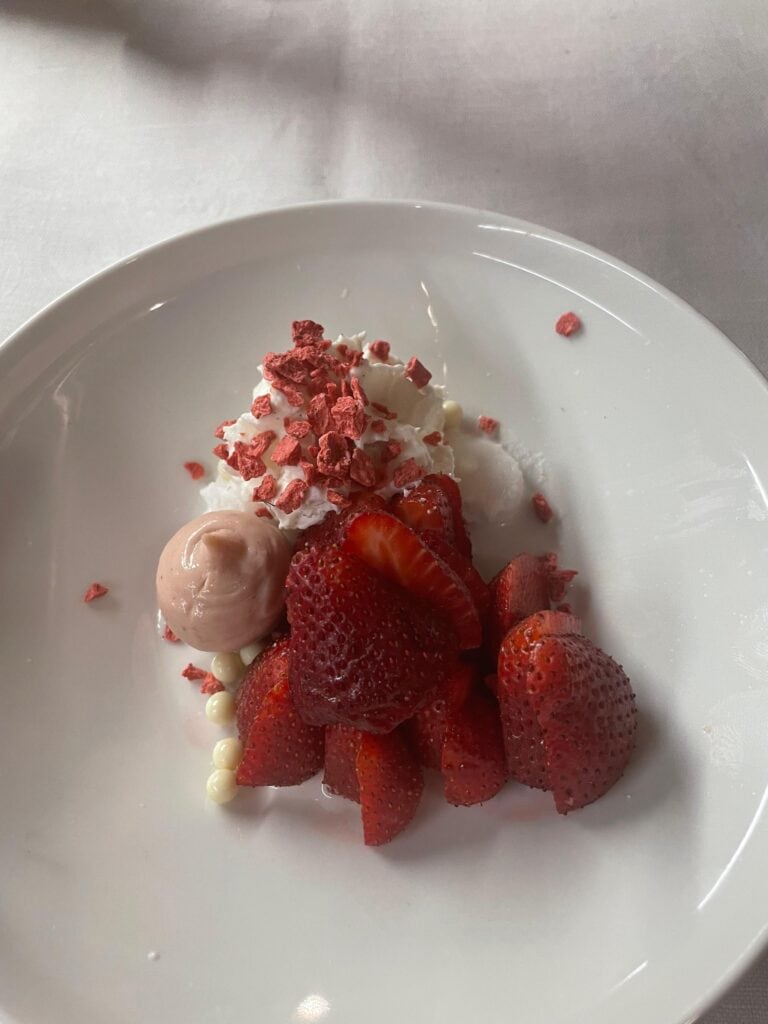

Dinner at Salumeria Roscioli in Rome
For dinner, book a table at Salumeria Roscioli for Roman classics. It is casual, lively and fun, with a deli counter and wine and food stacked up all the walls. The food is amazing – a friend who is a chef told me that this place is her deathbed meal, and I could not agree more. Try the burrata with winter black truffle pearls (and obviously have a Roman pasta too).
(Yes, there are many Roscioli restaurants on this itinerary, and no, I don’t think that’s a problem – my husband commented when we were there that they were taking over Rome. If they are, it’s a delicious thing.)
Day 4 – The Vatican


The Vatican Museums
Morning – St Peter’s Basilica
The Vatican is technically a separate country, and although they have very visible policing, you don’t need to bring your passport to get there. The Vatican is across the river and not really close to Rome’s historic centre, so we got a taxi.
Start your day in the Vatican City at St Peter’s Basilica, the largest and most spectacular church in Rome, built on the site where myth holds that St Peter was buried. In the basilica, don’t miss Michelangelo’s Pietà, a marble sculpture of Jesus and Mary, the bronze sculpture of St Peter, and Bernini’s Cattedra di San Pietro.
St Peter’s Basilica is free to visit, but there are some pretty insane security lines, a bit like an airport. You can book a fast track ticket which allows you to skip the long lines, to avoid that. You’ll need to pay extra if you want to climb the dome.
Check availability and prices for St Peter’s Basilica here
You can also visit the stunningly manicured Vatican Gardens, but only on a guided tour, which must be booked in advance.
Afternoon – Pizza, Gelato and the Vatican Museums
For lunch, go to the nearby and very famous Bonci Pizzarium. Don’t be put off by the queues here – these are not just tourists. You take a number and wait for it to be called, and then you choose your pizza flavour and pay by weight. We went completely overboard here, so a word of advice: a good number of slices is around two per person, or three if you are extra hungry.
If you feel like a slightly more formal sit-down lunch, a lovely alternative is L’Arcangelo. The only downside is that it is about a 25-minute walk from the Vatican City, so you might be better off taking a taxi.
Have a gelato at Old Bridge before heading to the Vatican Museums, containing one of the most impressive art collections in the world. Your ticket also includes the Sistine Chapel, which is at the end of the visit. The museums tend to be quieter in the afternoons than in the mornings, and Tuesdays and Thursdays are best.
Check availability and prices for the Vatican Museums and Sistine Chapel here
A lot like the Louvre in Paris, there is a lot to see at the Vatican Museums, and it is impossible to do it all in one day. Things worth seeing here are works by Raphael, Caravaggio, and Leonardo da Vinci.
The Sistine Chapel is at the end of your visit, and is famous for Michelangelo’s ceiling paintings and his painting of the Last Judgment. The most recent restoration of the Sistine Chapel was finished in 1999, and took 20 years to complete. The paintings are now much brighter than before – the blue paint in the Last Judgment is particularly striking.
Evening – A Tasting Menu at Rome’s Best Restaurant

The tasting menu at Rimessa Roscioli in Rome 


After a long day of culture, you deserve a delicious dinner for your last night in Rome – book the tasting menu, with the wine pairing, at Rimessa Roscioli, and thank me later. If you’re not into tasting menus, you can’t go wrong with beautiful Pianostrada.
FAQS about this 5 Day Rome Itinerary
How should I do a 3-day Rome itinerary?
If you only have three days in Rome, the best sights are on days 1, 2 and 4. Skip Day 4, and do the Pantheon on Day 1 with the rest of the Centro Storico sights.
How should I do a 5-day Rome itinerary?
If you have five days in Rome, skip Villa Borghese on Day 3 of this Itinerary, and spend the afternoon of Day 3 exploring Trastevere. Then use your extra day for a full day at Villa Borghese.
How should I do a 6-day Rome itinerary
If you have five days in Rome, do a day trip to Naples for pizza or Pompeii to see the ruins.
Final Thoughts
Like any European city, one of the best things about Rome is aimless wandering, and all the lovely things you discover when you do. That said, even a loose itinerary will make sure you don’t miss the icons. Whether you’re dreaming of history, getting lost in cobblestone streets or having the best meal of your life, this 4-day Rome itinerary gives you a balanced mix of sightseeing, downtime, and unforgettable food.
If you’re staying longer in Italy, see my Amalfi Coast and Capri itineraries, or have a look at what to eat in Italy by region.